
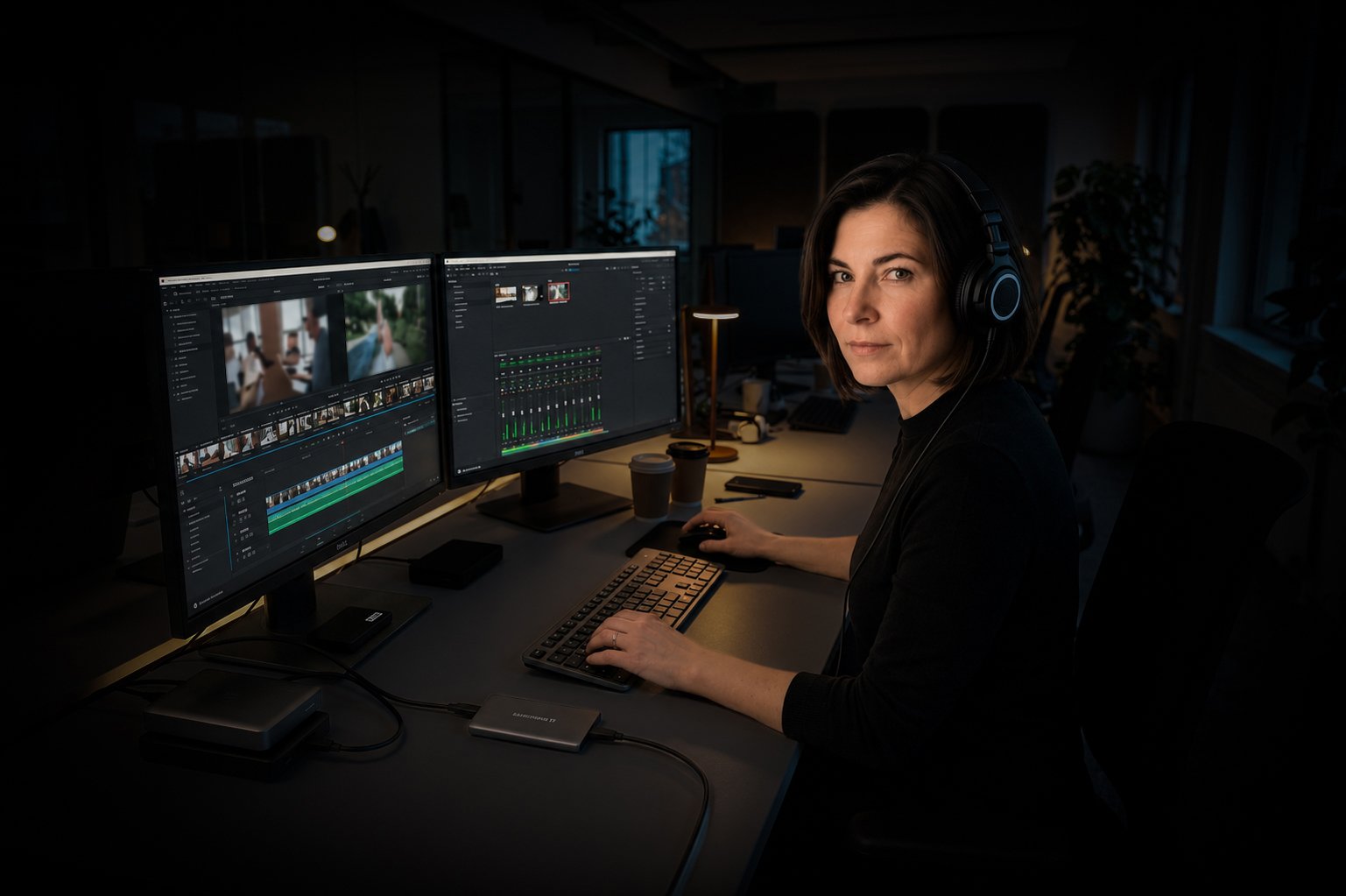
EditinG,
to me,
is
about
LISTENING -
to the footage, to the rhythm of a performance, to what the material is already trying to say.
I came to editing through directing, but I stayed because I realized the story truly takes shape in the cutting room.
Good editing shouldn't announce itself. It should make the message easier to receive — the right pace, the right cut, the right moment of silence. When it's working, the audience doesn't notice the edit. They just feel it.
Most of my client work is about exactly that: shape content into something clear, consistent, and worth watching — without overcomplicating the process or losing what made it interesting in the first place.
Outside of client work, narrative is where I keep coming back — the tension, the character, the moment a cut changes everything.
The clips below are practice work: genres I don't always encounter professionally — drama, horror, action — each demanding a different emotional language.
I share samples because I think an editor's creative range matters, and a reel of client work only shows you what someone has done, not what they're capable of.
PASSION PROJECTS
DRAMA
Performance and pressure built through pacing.
horror
Atmosphere first. The cut lands when the tension earns it.
DRAMA
Past and present in conversation, revealed through cross-cutting.
If you’re looking for an editor — or simply want to talk through a project that’s still taking shape — I’m always open to a conversation.